That year, 2004, a Montana advisory council had its work, the state’s first Gray Wolf Conservation and Management Plan, approved by the U.S. Fish and Wildlife Service. FWS made no bones about the plan’s quality
.Montana’s wolf management challenge - Hungry Horse News: Columns:

Discussing America's wilderness, the environment, wildlife, conservation, sled dogs and a little bit of politics
Saturday, November 16, 2013
Wolf watchers want IDs of dead animals near Yellowstone
Wolf watchers want IDs of dead animals near park - Jackson Hole News&Guide: Environmental: "Wolf watchers in the Lamar Valley — perhaps the most famous place on Earth to spot a Canis lupus in the wild — fear the worst: that the animals killed were members of the Lamar Canyon Pack"

Saturday, December 24, 2011
Yellowstone Transformed 15 Years After the Return of Wolves

By: Oregon State University
CORVALLIS, Ore. Dec. 21, 2011 – On the 15th anniversary of the return of wolves to Yellowstone National Park, a quiet but profound rebirth of life and ecosystem health is emerging, scientists conclude in a new report.
For the first time in 70 years, the over-browsing of young aspen and willow trees has diminished as elk populations in northern Yellowstone declined and their fear of wolf predation increased. Trees and shrubs have begun recovering along some streams, providing improved habitat for beaver and fish. Birds and bears also have more food.
"Yellowstone increasingly looks like a different place," said William Ripple, a professor in the Department of Forest Ecosystems and Society at Oregon State University, and lead author of the study.
"These are still the early stages of recovery, and some of this may still take decades," Ripple said. "But trees and shrubs are starting to come back and beaver numbers are increasing. The signs are very encouraging."
The findings of this report, based on a recent analysis done by OSU researchers and a review of many other studies as well, were just published in Biological Conservation, a professional journal. They outline an ecosystem renaissance that has taken place since wolves were restored to Yellowstone after being extirpated in the 1920s.
Read more . . .
Saturday, November 19, 2011
Global Cooling? - Dispelling An Enduring Myth With One Image
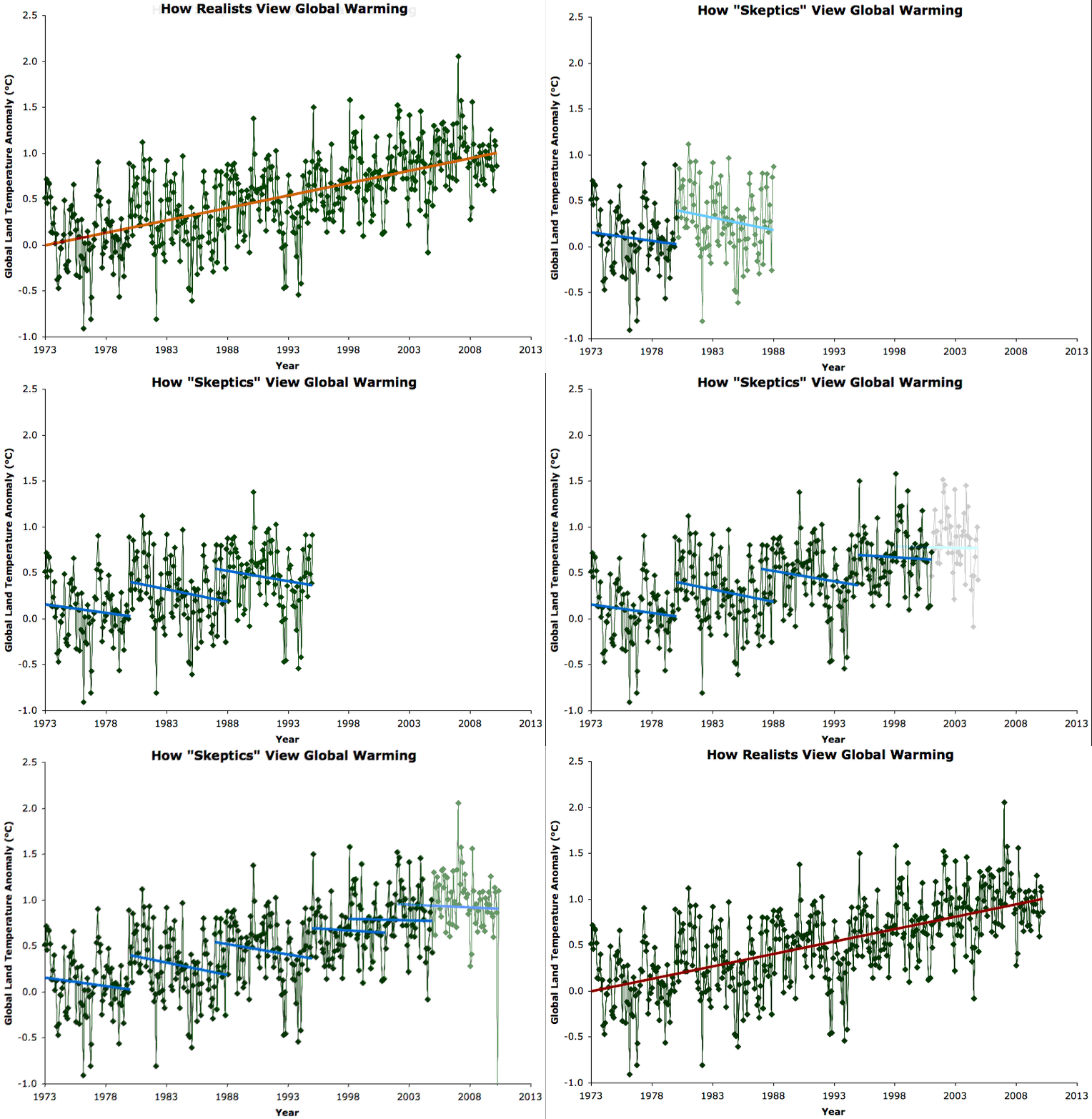
Courtesy John Cook at Skeptical Science
If the Earth’s temperature was the same year after year, then the effects of increasing greenhouse gases would be very easy to spot. Unfortunately, Mother Nature rarely makes things that easy to figure out. Besides the daily and seasonal cycles, we also have decadal temperature swings caused by the sunspot cycle and ocean/atmospheric oscillations. This tends to confuse non scientists, and fools many into believing claims that global warming has stopped. The Heartland Int. in Chicago (political think tank) has long been a major purveyor of this silliness.
John Cook, at Skeptical Science, has posted an incredible graphic that dispels this myth all by itself. This myth is very widespread, and if you google “global cooling” and you will see a plethora of web sites telling you the warming has ended and the planet is cooling. Those that believe this sort of thing will usually show a graph of temperatures to support it, but that graph will always cover just a few years. The image above shows why they do it that way; It’s kind of like saying that spring is cancelled because of an April cold snap!
Skeptical Science has an in-depth post that goes along with the graphic, and I highly recommend reading it. I’ll finally get to meet John Cook (at the December AGU conference) in San Francisco! He’s done an amazing job of showing the true science and dispelling the ubiquitous myths, that sound scientific, but are really just politics in disguise. Read it, and next time you’ll know when someone is giving you political belief dressed up to look like science.
Read more:AGU Blogosphere | Dan's Wild Wild Science Journal | Dispelling An Enduring Myth With One Image:
Saturday, November 5, 2011
The Life and Times of the Alaskan Malamute
By Joe Henderson Mushing.com
“Hey! Knock it off!” I scolded Johnny as he slapped the harness out of my hand and peed on it. He knows that harness is a good thing. He loves it. It’s his harness and he wants everyone to know it!
 Johnny’s the boss. He’s the kingpin of the dog yard, or so he thinks. The other males keep their distance from him and they don’t dare cross his path or growl at him. They know he’ll just pin them to the ground. Johnny’s a typical dominating Alaskan malamute with a passion to indulge in a good fight once in a while. With most malamutes, this raging hormonal fighting stage lasts only a year or two, unless of course they’re Johnny, who lingered in that phase for eight years. Thank God he’s finally settled down at 10 years of age! But not all malamutes play this dominate role and have a temperament like Johnny. In understanding this behavior, let’s take a stroll through Johnny’s canine cranium and try to envision his lust for life through his eyes.
Johnny sees himself as an impressive malamute specimen. His black and white mask and black coat glistens in the morning sun. Johnny’s deep chest is supported by wide, muscular shoulders and his brushy tail curves perfectly over his back. Johnny enjoys being next to the young gals in the team and feels that no one else should be around them but him. If the other males get close to his girlfriends, Johnny reminds them who they’re messing with through a deep growl. When the other males hear his warning, they back off immediately, leaving the old grump alone. Johnny’s gotten used to be treated so well by others in the team and his ego has grown ridiculously large. Even while Johnny is hitched in the team he’s constantly showing off.
A typical day running the team with Johnny starts something like this: I hitch Johnny in wheel position. “Johnny you’re going next to Nikko…and be nice to him.” Johnny recognizes my commanding tone, yet he doesn’t understand all my words and he doesn’t care anyway. Nikko is a younger dog who’s just getting integrated into the team. He stands excitedly next to Johnny, wanting to run. But Johnny’s somewhat intimidated by Nikko, who’s grown up to be quite a large male. So, Johnny anticipates a good fight, or at least he’s looking forward to giving Nikko his best growl so he can watch the young rookie cower. At two years old, Nikko’s powerful chest and shoulders are starting to be a dominating feature of his physique, presenting a threat to Johnny’s domain.
Johnny hopes Nikko squares off with him. “Damn I’ve been looking forward to putting a scar down Nikko’s muzzle for quite some time now,” Johnny grumbles to himself. Nikko glances at him. Johnny rolls his lip above his sharp canines and lets out the snarliest growl he can muster. Nikko ignores the snarl, stiffens his legs trying to look taller than Johnny and thinks, “some day, buddy, you will be old, and then we’ll see.”
Read more
“Hey! Knock it off!” I scolded Johnny as he slapped the harness out of my hand and peed on it. He knows that harness is a good thing. He loves it. It’s his harness and he wants everyone to know it!
 Johnny’s the boss. He’s the kingpin of the dog yard, or so he thinks. The other males keep their distance from him and they don’t dare cross his path or growl at him. They know he’ll just pin them to the ground. Johnny’s a typical dominating Alaskan malamute with a passion to indulge in a good fight once in a while. With most malamutes, this raging hormonal fighting stage lasts only a year or two, unless of course they’re Johnny, who lingered in that phase for eight years. Thank God he’s finally settled down at 10 years of age! But not all malamutes play this dominate role and have a temperament like Johnny. In understanding this behavior, let’s take a stroll through Johnny’s canine cranium and try to envision his lust for life through his eyes.
Johnny sees himself as an impressive malamute specimen. His black and white mask and black coat glistens in the morning sun. Johnny’s deep chest is supported by wide, muscular shoulders and his brushy tail curves perfectly over his back. Johnny enjoys being next to the young gals in the team and feels that no one else should be around them but him. If the other males get close to his girlfriends, Johnny reminds them who they’re messing with through a deep growl. When the other males hear his warning, they back off immediately, leaving the old grump alone. Johnny’s gotten used to be treated so well by others in the team and his ego has grown ridiculously large. Even while Johnny is hitched in the team he’s constantly showing off.
A typical day running the team with Johnny starts something like this: I hitch Johnny in wheel position. “Johnny you’re going next to Nikko…and be nice to him.” Johnny recognizes my commanding tone, yet he doesn’t understand all my words and he doesn’t care anyway. Nikko is a younger dog who’s just getting integrated into the team. He stands excitedly next to Johnny, wanting to run. But Johnny’s somewhat intimidated by Nikko, who’s grown up to be quite a large male. So, Johnny anticipates a good fight, or at least he’s looking forward to giving Nikko his best growl so he can watch the young rookie cower. At two years old, Nikko’s powerful chest and shoulders are starting to be a dominating feature of his physique, presenting a threat to Johnny’s domain.
Johnny hopes Nikko squares off with him. “Damn I’ve been looking forward to putting a scar down Nikko’s muzzle for quite some time now,” Johnny grumbles to himself. Nikko glances at him. Johnny rolls his lip above his sharp canines and lets out the snarliest growl he can muster. Nikko ignores the snarl, stiffens his legs trying to look taller than Johnny and thinks, “some day, buddy, you will be old, and then we’ll see.”
Read more
Friday, November 4, 2011
Greater Yellowstone grizzlies: 'The road to recovery'

Courtesy photo/Neale Blank
Written by Gib Mathers
Powell Tribune
Powell Tribune
A grizzly bear takes five near Indian Pond in Yellowstone National Park. The grizzly bear population in the Greater Yellowstone Ecosystem has enjoyed a remarkable recovery in recent decades. But, with the recent spate of grizzly bear attacks on humans, officials and others plan to escalate the bear safety message hoping to curb nasty encounters with the bruins.
Population rebound a ‘success story’
(Editor’s note: This is the first part in a series exploring the history of grizzly bear recovery efforts in the Greater Yellowstone Ecosystem.)
The grizzly bear population rebound in the Greater Yellowstone Ecosystem “is probably the biggest success story in endangered species recovery in the last 100 years,” said Mark Bruscino, bear management program supervisor for the Wyoming Game and Fish Department.
Although the bears’ habitat has been depleted significantly in the last 100 years or more, today’s grizzly population has stabilized in the ecosystem after plunging to fewer than 100 bears in the 1970s. This year’s count is conservatively estimated at nearly 600 grizzlies.
Yellowstone National Park was one of the last sanctuaries for grizzlies in the lower 48 states, said an Interagency Grizzly Bear Study Team 2008 report, “Grizzly Bears in the Greater Yellowstone Ecosystem: From Garbage, Controversy and Decline to Recovery.”
Historically, seeing grizzly and black bears was a choice attraction for sightseers to Yellowstone National Park. By the 1880s, visitors assembled to observe the bruins devouring garbage dumped behind park hotels. By 1910, black bears learned to mooch food from tourists in wagons. In 1907 park staff were killing some grizzly and black bears due to human-bear conflicts, said the report.
Wednesday, October 12, 2011
The Decline of Yellowstone’s Famous Druid Peak Pack
 Yellowstone's famous Druid Peak Pack, which roamed the Lamar Valley for nearly 15 years, disappeared from the park’s landscape in 2010. It was considered the most closely watched and photographed wolf pack in the world.
Through their intensive monitoring and research activities, Yellowstone Wolf Project staff have been able to piece together the story of the decline of the Druids. The details emphasize the life and death struggle wolves face to survive, even in a protected area like Yellowstone.
It is probable that intraspecific strife – or competition and conflict between wolf packs – contributed to the Druids’ downfall. Disease may have tipped the scale to their disadvantage, as well. However, since the former Druid territory is now occupied by another pack, it appears that the territory is still prime wolf habitat.
Sunday, August 21, 2011
Are Hunters Good Wildlife Stewards When It Comes To Wolves? Not According To This Study
by Kurt Repanshek National Parks Traveler
A new study likely to be controversial in some quarters suggests that hunters are not especially good wildlife stewards when the wildlife in question are wolves. While hunters long have been seen as conservation advocates for a wide range of species, when it comes to wolves the study by two University of Wisconsin-Madison researchers would seem to indicate that the only good wolf is a dead wolf in the hunter's mind. “Hunters were some of the least tolerant of wolves among our respondents, and the closer you got to wolf range the less tolerant they were,” said Adrian Treves, a professor in the UW-Madison Nelson Institute for Environmental Studies. Professor Treves and a colleague, Kerry Martin, took up a research project beginning in 2001 to survey hunters and non-hunters on attitudes toward wolves. Over the course of six years they interviewed 2,320 residents of Wisconsin, Idaho, Montana, and Wyoming and were able to draw a picture of perceptions when it came to wolves. (Their findings appear in the August issue of the peer-reviewed journal Society and Natural Resources.
Read more
A new study likely to be controversial in some quarters suggests that hunters are not especially good wildlife stewards when the wildlife in question are wolves. While hunters long have been seen as conservation advocates for a wide range of species, when it comes to wolves the study by two University of Wisconsin-Madison researchers would seem to indicate that the only good wolf is a dead wolf in the hunter's mind. “Hunters were some of the least tolerant of wolves among our respondents, and the closer you got to wolf range the less tolerant they were,” said Adrian Treves, a professor in the UW-Madison Nelson Institute for Environmental Studies. Professor Treves and a colleague, Kerry Martin, took up a research project beginning in 2001 to survey hunters and non-hunters on attitudes toward wolves. Over the course of six years they interviewed 2,320 residents of Wisconsin, Idaho, Montana, and Wyoming and were able to draw a picture of perceptions when it came to wolves. (Their findings appear in the August issue of the peer-reviewed journal Society and Natural Resources.
Read more
Subscribe to:
Posts (Atom)